Automation Testing

What are the differences between get() and navigate() method?


The differences between get() and navigate() methods are listed below.

sl.no.get()navigate()
1It is responsible for loading the page and waits until the page has finished loading.It is only responsible for redirecting the page and then returning immediately.
2It cannot track the history of the browser.It tracks the browser history and can perform back and forth in the browser.

Example

With get().

import org.openqa.selenium.By;
import org.openqa.selenium.Keys;
import org.openqa.selenium.WebDriver;
import org.openqa.selenium.WebElement;
import org.openqa.selenium.chrome.ChromeDriver;
import java.util.concurrent.TimeUnit;
import java.util.List;
public class LaunchBrw {
   public static void main(String[] args) {
      System.setProperty("webdriver.chrome.driver", "C:\\Users\\ghs6kor\\Desktop\\Java\\chromedriver.exe");
      WebDriver driver = new ChromeDriver();
      String url = "https://www.tutorialspoint.com/index.htm";
      driver.get(url);
      driver.manage().timeouts().implicitlyWait(12, TimeUnit.SECONDS);
      driver.close();
   }
}

Example

With navigate().

import org.openqa.selenium.By;
import org.openqa.selenium.Keys;
import org.openqa.selenium.WebDriver;
import org.openqa.selenium.WebElement;
import org.openqa.selenium.chrome.ChromeDriver;
import java.util.concurrent.TimeUnit;
import java.util.List;
public class BrowserNavigation {
   public static void main(String[] args) {
      System.setProperty("webdriver.chrome.driver", "C:\\Users\\ghs6kor\\Desktop\\Java\\chromedriver.exe");
      WebDriver driver = new ChromeDriver();
      String url = "https://www.tutorialspoint.com/index.htm";
      // new browser will launch and navigate to the URL
      driver.navigate().to(url);
      driver.manage().timeouts().implicitlyWait(12, TimeUnit.SECONDS);
      // refresh the current browser
      driver.navigate().refresh();
      //Using id tagname attribute combination for css expression
      driver.findElement(By.cssSelector("input[name=’search’]")). sendKeys("Selenium");
      //browser will go back to the previous page
      driver.navigate().back();
      //browser will go move to the next page
      driver.navigate().forward();
      driver.close();
   }
}

Java

Java Program to Iterate through each characters of the…

Here we will learn to iterate through each characters of the string.

To understand this example, you should have the knowledge of the following Java programming topics:

  • Java Strings
  • Java for Loop
  • Java for-each Loop

Example 1: Loop through each character of a string using for loop

class Main {
  public static void main(String[] args) {

    // create a string
    String name = "Programiz";

    System.out.println("Characters in " + name + " are:");

    // loop through each element
    for(int i = 0; i<name.length(); i++) {

      // access each character
      char a = name.charAt(i);
      System.out.print(a + ", ");
    }
  }
}

Output

Characters in Programiz are:
P, r, o, g, r, a, m, i, z,

In the above example, we have used the for-loop to access each element of the string. Here, we have used the charAt() method to access each character of the string.


Example 2: Loop through each character of a string using for-each loop

class Main {

  public static void main(String[] args) {

    // create a string
    String name = "Programiz";

    System.out.println("Characters in string \"" + name + "\":");

    // loop through each element using for-each loop
    for(char c : name.toCharArray()) {

      // access each character
      System.out.print(c + ", ");
    }

  }
}

Output

Characters in string "Programiz":
P, r, o, g, r, a, m, i, z,

In the above example, we have converted the string into a char array using the toCharArray(). We then access each element of the char array using the for-each loop.

Java

Private Constructor in Java

In Java, the constructoris a special type of method that has the same name as the class name. Internally, a constructor is always called when we create an object of the class. It is used to initialize the state of an object.

In the same way, Java also allows us to create a private constructor. In this section, we will discuss private constructors in Java, rules for creating a private constructor, and its use cases. Also, we will see its implementation.

What is a private constructor?

Java allows us to declare a constructor as private. We can declare a constructor private by using the private access specifier. Note that if a constructor is declared private, we are not able to create an object of the class. Instead, we can use this private constructor in Singleton Design Pattern.

Rules for Private Constructor

The following rules keep in mind while dealing with private constructors.

  • It does not allow a class to be sub-classed.
  • It does not allow to create an object outside the class.
  • If a class has a private constructor and when we try to extend the class, a compile-time error occurs.
  • We cannot access a private constructor from any other class.
  • If all the constant methods are there in our class, we can use a private constructor.
  • If all the methods are static then we can use a private constructor.
  • We can use a public function to call the private constructor if an object is not initialized.
  • We can return only the instance of that object if an object is already initialized.

Use Cases of Private Constructor

The main purpose of using a private constructor is to restrict object creation. We also use private constructors to implement the singleton design pattern. The use-cases of the private constructor are as follows:

  • It can be used with static members-only classes.
  • It can be used with static utilityor constant classes.
  • It can also be used to create singleton classes.
  • It can be used to assign a name, for instance, creation by utilizing factory methods.
  • It is also used to avoid sub-classing.
  • It incorporates the factory methods.

Let’s see the implementation of the private constructor.

Implementation of a Private Constructor

A.java

  1. public class A  
  2. {  
  3. //craeting a private constructor   
  4. private A()  
  5. {  
  6. }  
  7. void display()  
  8. {  
  9. System.out.println(“Private Constructor”);  
  10. }  
  11. }  
  12. private class Test  
  13. {  
  14. public static void main(String args[])  
  15. {  
  16. //compile time error  
  17. A obj = new A();   
  18. }  
  19. }  

Output:

Private Constructor in Java

PrivateConstructorDemo.java

  1. public class PrivateConstructorDemo   
  2. {  
  3. //creating an instance variable of the class Tester  
  4. private static PrivateConstructorDemo pcd;  
  5. //creating a private constructor  
  6. private PrivateConstructorDemo()  
  7. {  
  8. }  
  9. //creating a static method named getInstance()  
  10. public static PrivateConstructorDemo getInstance()  
  11. {  
  12. if(pcd == null)  
  13. {  
  14. //creating a constructor of the class      
  15. pcd = new PrivateConstructorDemo();  
  16. }  
  17. return pcd;  
  18. }  
  19. //main() method  
  20. public static void main(String args[])   
  21. {  
  22. PrivateConstructorDemo pcd = PrivateConstructorDemo.getInstance();  
  23. PrivateConstructorDemo pcd1 = PrivateConstructorDemo.getInstance();  
  24. //invokes the getInstance() method and prints the corresponding result  
  25. System.out.println(pcd.equals(pcd1));  
  26. }    
  27. }  

Output:

true
Uncategorized

Difference between HashMap and Hashtable

HashMap and Hashtable both are used to store data in key and value form. Both are using hashing technique to store unique keys.

But there are many differences between HashMap and Hashtable classes that are given below.

HashMapHashtable
1) HashMap is non synchronized. It is not-thread safe and can’t be shared between many threads without proper synchronization code.Hashtable is synchronized. It is thread-safe and can be shared with many threads.
2) HashMap allows one null key and multiple null values.Hashtable doesn’t allow any null key or value.
3) HashMap is a new class introduced in JDK 1.2.Hashtable is a legacy class.
4) HashMap is fast.Hashtable is slow.
5) We can make the HashMap as synchronized by calling this code
Map m = Collections.synchronizedMap(hashMap);
Hashtable is internally synchronized and can’t be unsynchronized.
6) HashMap is traversed by Iterator.Hashtable is traversed by Enumerator and Iterator.
7) Iterator in HashMap is fail-fast.Enumerator in Hashtable is not fail-fast.
8) HashMap inherits AbstractMap class.Hashtable inherits Dictionary class.
Uncategorized

Difference between abstract class and interface

Abstract class and interface both are used to achieve abstraction where we can declare the abstract methods. Abstract class and interface both can’t be instantiated.

But there are many differences between abstract class and interface that are given below.

Abstract classInterface
1) Abstract class can have abstract and non-abstract methods.Interface can have only abstract methods. Since Java 8, it can have default and static methods also.
2) Abstract class doesn’t support multiple inheritance.Interface supports multiple inheritance.
3) Abstract class can have final, non-final, static and non-static variables.Interface has only static and final variables.
4) Abstract class can provide the implementation of interface.Interface can’t provide the implementation of abstract class.
5) The abstract keyword is used to declare abstract class.The interface keyword is used to declare interface.
6) An abstract class can extend another Java class and implement multiple Java interfaces.An interface can extend another Java interface only.
7) An abstract class can be extended using keyword “extends”.An interface can be implemented using keyword “implements”.
8) A Java abstract class can have class members like private, protected, etc.Members of a Java interface are public by default.
9)Example:
public abstract class Shape{
public abstract void draw();
}
Example:
public interface Drawable{
void draw();
}

Simply, abstract class achieves partial abstraction (0 to 100%) whereas interface achieves fully abstraction (100%).

Example of abstract class and interface in Java

Let’s see a simple example where we are using interface and abstract class both.

  1. //Creating interface that has 4 methods  
  2. interface A{  
  3. void a();//bydefault, public and abstract  
  4. void b();  
  5. void c();  
  6. void d();  
  7. }  
  8.   
  9. //Creating abstract class that provides the implementation of one method of A interface  
  10. abstract class B implements A{  
  11. public void c(){System.out.println(“I am C”);}  
  12. }  
  13.   
  14. //Creating subclass of abstract class, now we need to provide the implementation of rest of the methods  
  15. class M extends B{  
  16. public void a(){System.out.println(“I am a”);}  
  17. public void b(){System.out.println(“I am b”);}  
  18. public void d(){System.out.println(“I am d”);}  
  19. }  
  20.   
  21. //Creating a test class that calls the methods of A interface  
  22. class Test5{  
  23. public static void main(String args[]){  
  24. A a=new M();  
  25. a.a();  
  26. a.b();  
  27. a.c();  
  28. a.d();  
  29. }} 
Uncategorized

How to Use Log4j in Selenium

What is Logging?

Logging is a process that takes applications to a newer level with information logs on how the applications may or may not have performed/executed. It gives an exact idea of software performance, including any shortcomings.

Log4j in Selenium is one such logging framework that helps in gathering information in the form of logs or log files.

What is Log4j in Selenium?

Log4j is a logging framework written in Java that provides an easy way for logging in Selenium. In a nutshell, the framework gives out information about everything that goes on during the software execution.

Log4j also provides insight into anything that may have gone wrong during software execution or automation. Overall, Log4j documents the output in the form of logs that can be examined later for purposes such as auditing small and large-scale Selenium projects.

Let’s take a look at the various components of the Log4j logging framework.

Components of Log4j

The Log4j logging framework comprises the following components:

  1. Logger
  2. Appenders
  3. Layout

Logger

The function of the logger in Log4j is basically storing and capturing all the necessary logging information that will be generated using the framework.

To truly understand its functioning, let’s dig a little deeper and discuss the logger class, and log level methods. The loggers also decide which priority is going to be captured.

  1. Logger Class – To fully use the logger, create an instance for a logger class where all the generic methods will be at the user’s disposal, required to use Log4j.
  2. Log Levels – These are the methods that will be used to print the log messages. There are primarily only a few log levels that are used in a script.
  • ALL – This level will prioritize and include everything in the logs.
  • ERROR – This level will show messages that inform users about error events that may not stop the application.
  • WARN – This level will show information regarding warnings, that may not stop the execution but may still cause problems.
  • DEBUG – This level will log debugging information.
  • INFO – This level will log the progress of the application.
  • FATAL – This will print information critical to the system that may even crash the application.

Appenders

The appender basically grabs information from the logger and writes log messages to a file or any other storage location. The following are some of the appenders one can use for Log4j:

  1. FileAppender – This will append the log messages to a file.
  2. RollingFileAppender – It will perform the same function as FileAppender, but users will be able to specify the maximum file size. Once the limit is exceeded, the appender will create another file to write the messages.
  3. DailyRollingFileAppender – It specifies the frequency by which the messages are to be written to the file.
  4. ConsoleAppender – In this, the appender will simply write the log messages in the console.

Layout

The layout is where the format in which log messages will appear is decided. There are several layouts one can use for log messages:

  1. Pattern Layout – The user must specify a conversion pattern based on which the logs will be displayed. Otherwise, it takes the default conversion pattern in case of “no pattern specified”.
  2. HTML Layout – In this layout, the format of logs will be in the form of an HTML table.
  3. XML Layout – This will show the logs in an XML format.

How to Use Log4j in Selenium

Follow the steps below to successfully run Log4j with Selenium Webdriver:

  1. Write an automation script, such as the one in the example below. It is a simple script that opens a URL, send keys to username and password, and ends the script when it clicks the login button.
  2. After creating the script, create a log4j.properties file and specify the root logger, appended, and layout information in the file.
  3. Import log4j dependencies like Logger, PropertyConfigurator, and add them to the script along with the logger class.
  4. Add the messages that will be displayed in the log file.

Now, let’s try to understand the code written below:

import org.apache.log4j.Logger;
import org.apache.log4j.PropertyConfigurator;
import org.openqa.selenium.By;
import org.openqa.selenium.JavascriptExecutor;
import org.openqa.selenium.UnexpectedAlertBehaviour;
import org.openqa.selenium.WebDriver;
import org.openqa.selenium.chrome.ChromeDriver;
import org.openqa.selenium.chrome.ChromeOptions;


public class Bstack01 implements driverHelp {
	static Logger log = Logger.getLogger(Bstack01.class);
	public static void main(String[] args) {
	PropertyConfigurator.configure("F:\\Work Environment\\MyProject\\QA_Round\\src\\log4j.properties");
	System.setProperty("webdriver.chrome.driver", "//path of chrome driver");
	ChromeOptions options = new ChromeOptions();
	options.setUnhandledPromptBehaviour(UnexpectedAlertBehaviour.IGNORE);
	WebDriver driver = new ChromeDriver(options);
	JavascriptExecutor js = (JavascriptExecutor)driver;
	driver.get("https://www.browserstack.com/users/sign_in");
	log.info("Open browserstack");
	driver.manage().window().maximize();
	log.info("Maximize window size");
	driver.findElement(By.id("user_email_login")).sendKeys("rbc@xyz.com");
	System.out.println("User name is etered");
	log.info("enter username");
	driver.findElement(By.id("user_password")).sendKeys("password");
	System.out.println("Password is entered");
	log.info("enter password");
	//driver.findElement(By.name("commit")).click();
	js.executeScript("document.getElementById('user_submit').click();");
	log.info("click on login");
	System.out.println("Sign in button is clicked");
	driver.close();

	}
	}

Log4j with Properties File Configuration

The properties configuration file will contain the information regarding the following:

  1. The first objective is to identify the log level and the destination where the log will be written. In this case, the log level is the DEBUG level and a file is the destination.
  2. The next step is to establish an appender. This example uses a RollingFIleAppender with a maximum capacity of 2MB and the file location is also specified in this section. The MaxBackupIndex is the number of files that will be created in case the file size is exceeded.
  3. The last section contains the layout in which a format is specified. This example uses PatternLayout. And, since we have not used a conversion pattern here, it will take the default conversion pattern into account.
#root logger
log4j.rootLogger = DEBUG, file
#appender
log4j.appender.file = org.apache.log4j.RollingFileAppender
log4j.appender.file.File = PATH\\TO\\firstoutput.log
log4j.appender.file.MaxFileSize = 2MB
log4j.appender.file.MaxBackupIndex = 3
#layout
log4j.appender.file.layout = org.apache.log4j.PatternLayout


Automation Testing

How to perform search in amazon using selenium.

Solution:

  1. Create a new Project in Eclipse.
  2. Add the required libraries for Selenium.

Now in first you need to create an interface: driver

import org.apache.log4j.Logger;
import org.openqa.selenium.WebDriver;
import org.openqa.selenium.WebElement;
import org.openqa.selenium.firefox.FirefoxDriver;
import org.openqa.selenium.interactions.Action;
import org.openqa.selenium.remote.DesiredCapabilities;

public interface driver {
	
	public  WebDriver wd = new FirefoxDriver();
	public static String baseURL = "http://automationpractice.com/index.php";
	public static String driverPath = "F:\\Work Environment\\MyProject\\gekodriver\\geckodriver.exe";
	public void CallDriver();
	public static String email = "rahul@gmail.com";
	public static String password = "pass1234";
	public static Logger log  = Logger.getLogger(driver.class.getName());
	public static WebElement mainMenu = null;
	public static Action actions = null;
}

Now create a new TestNG Class and enter the following script:

import org.testng.annotations.Test;
import org.testng.annotations.BeforeTest;
import org.openqa.selenium.By;
import org.openqa.selenium.WebElement;
import org.testng.Assert;
import org.testng.annotations.AfterTest;

public class Search1 implements driver {
	public static WebElement se;
  
  @BeforeTest
  public void CallDriver() {
	  
	  System.setProperty("webdriver.gecko.driver",driverPath );
	  wd.manage().window().maximize();
	  wd.get("https://www.amazon.com/");
	  log.debug("Navigated to Amazon.com");
  }
  
  @Test
  public void TestSearch() {
	  WebElement se = wd.findElement(By.id("twotabsearchtextbox"));
	  se.sendKeys("iphone");
	  log.debug("Entered a keyword to search");
	  
	  wd.findElement(By.id("nav-search-submit-button")).click();
	  log.debug("Search button is clicked");
	  
	  
  }
  
  @Test
  public void TestSearch1() {
	  
	  String actRe = wd.getCurrentUrl();
	  String exres = "https://www.amazon.com/s?k=iphone&ref=nb_sb_noss_2";
		  Assert.assertEquals(actRe,exres);
	  se.clear();  
  }
  
  @Test
  public void TestSearch2() {
	  wd.navigate().back();
	  log.debug("nvigated back to previous page");
	 System.out.println(wd.getCurrentUrl());
  }
  

  @AfterTest
  public void afterTest() {
	  wd.quit();
  }


}

Automation Testing

Automation Code Test 1

Core Automation: 

Navigate to https://blazedemo.com/index.php  

  1. Check if the title is displayed as ` Welcome to the Simple Travel Agency!`. This is the Home Page of application 
  1. Click on ` destination of the week! The Beach!` hyperlink and see if a new tab opens in your browser & the url has string `vacation`. Navigate back to home page tab. 
  1. Purchase a ticket:  
  1. Select `Mexico City` in departure city & `London` in destination city.  
  1. Click ‘Find Flights’. Select the flight with lowest price by clicking `Choose the flight` & see if we are navigated to purchase page (This should be dynamically handled and can work for any inputs in Step 3.a) 
  1. Check if a field named ‘Total Cost’ is available with price available in xxx.xx format. Click on ‘Purchase flight’ button 
  1. Check if the user is navigated to Purchase Confirmation page & store the `Id’ in the console or test report for future reference. 

POINTS TO CONSIDER: 

  • Create a new Java, Maven, C# project with an appropriate test framework like Nunit, TestNG etc., 
  • Automate tests in Chrome browser 
  • Use parameterized data instead of hardcoded test data 
  • Use Page Object Model with Selenium 
  • Make your functions more generic and use coding best practices as much as possible 
  • Once the test is done, please zip the entire project and send it to us 

Solution:

  1. Create a new Project in Eclipse.
  2. Add the required libraries for Selenium.

Now in first you need to create an interface: driverHelp

import java.util.Properties;

import org.openqa.selenium.WebDriver;
import org.openqa.selenium.chrome.ChromeDriver;

public interface driverHelp {
	
	public static WebDriver wd = new ChromeDriver();
	public static String cd1 = "F:\\Work Environment\\MyProject\\chromedriver.exe";
	public static String url = "https://blazedemo.com/index.php";
	
}

Once you create the interface, you need to create a new class “DemoTest” and implement the interface driverHelp.

Add the following code in your class file and run as TestNG project.

import org.testng.annotations.Test;
import org.testng.annotations.BeforeTest;
import org.openqa.selenium.By;
import org.openqa.selenium.WebDriver;
import org.openqa.selenium.WebElement;
import org.testng.annotations.AfterTest;
import org.openqa.selenium.support.ui.Select;

public class DemoTest implements driverHelp {
	
	public static WebElement we1;
  
  @BeforeTest
  public void callDriver() {
	  System.setProperty("webdriver.chrome.driver", cd1);
	  wd.manage().deleteAllCookies();
	  wd.manage().window().maximize();
	  wd.get(url);
  }
  
  
  @Test
  public void Test1() {
	 System.out.println(wd.getTitle());
	 
	 String t1 = "Welcome to the Simple Travel Agency!";
	 if(t1.equals(wd.getTitle()) ) {
		 System.out.println("Title Matched the expected result");
		 
	 }
	 
  }
	 
	 @Test
	  public void Test2() {
		wd.findElement(By.linkText("destination of the week! The Beach!")).click();
		System.out.println(wd.getCurrentUrl());
		wd.navigate().back();
		System.out.println(wd.getCurrentUrl());
			 
		 } 
	 
	 @Test
	  public void Test3() {
		 
		//d.findElement(By.className("form-inline")).click();
		 //.findElement(By.partialLinkText("Mexico City")).click();
		 
		 Select scity = new Select(wd.findElement(By.className("form-inline")));
		 scity.selectByVisibleText("Mexico City");
		 scity.selectByIndex(4);
		 
		 Select ecity = new Select(wd.findElement(By.name("toPort")));
		 ecity.selectByVisibleText("London");
		 ecity.selectByIndex(2);
		 
		 wd.findElement(By.xpath("/html/body/div[3]/form/div/input")).click();
		 
		 
	 }
	 
	 @Test
	  public void Test4() {
		 
		 wd.findElement(By.xpath("/html/body/div[2]/table/tbody/tr[3]/td[1]/input")).click();
		 System.out.printf("Flight with the lowest fair",wd.getTitle());
		 
	 }
	 
	 @Test
	  public void Test5() {
		 
		if( wd.findElement(By.partialLinkText("Total Cost")).isDisplayed())
		{
			System.out.println("Total Coast is present");
		}
		 
		 
	 }
	  
	 @Test
	  public void Test6() {
		 
		wd.findElement(By.xpath("/html/body/div[2]/form/div[11]/div/input")).click();
		System.out.println(wd.getCurrentUrl());
		 
	 }


  @AfterTest
  public void afterTest() {
	  wd.quit();
  }

}

Automation Testing

Creating a Automated script in Python

This is the starting of our Selenium automation with Python.

from selenium import webdriver
from selenium.webdriver.common.by import By
from selenium.webdriver.common.keys import Keys
from selenium.webdriver.support.ui import WebDriverWait
from selenium.webdriver.support.expected_conditions import presence_of_element_located

driver = webdriver.Chrome(executable_path="E://python tutorial//selenium_demo//chromedriver.exe")

driver.get("http://demo.guru99.com/test/newtours/")

print(driver.title)

driver.close()

For executing this script you will be required to Install Python, Selenium and Visual Studio Code (you can also use Pycharm)

“driver = webdriver.Chrome(executable_path=”E://python tutorial//selenium_demo//chromedriver.exe”)”

Here in this step we are providing the path of our chromedriver.exe

“driver.get(“http://demo.guru99.com/test/newtours/”)”

The above step consist of get(), this method is responsible for opening the URL in Browser.

print(driver.title) By using this step you can easily print the title of your application in test.

Once the test is completed you can close the application by using driver.close()

sss@DESKTOP-915O4CC MINGW64 /e/python tutorial/selenium_demo
$ [11924:11424:0413/142136.932:ERROR:device_event_log_impl.cc(214)] [14:21:36.932] Bluetooth: bluetooth_adapter_winrt.cc:712 GetBluetoothAdapterStaticsActivationFactory failed: Class not registered (0x80040154)
[11924:11424:0413/142137.037:ERROR:device_event_log_impl.cc(214)] [14:21:37.036] USB: usb_device_handle_win.cc:1056 Failed to read descriptor from node connection: A device attached to the system is not functioning. (0x1F)
python sampleTest01.py

DevTools listening on ws://127.0.0.1:55122/devtools/browser/65f31bf4-da7a-41a0-8743-8d9516859d7f
[1812:11504:0413/142151.565:ERROR:device_event_log_impl.cc(214)] [14:21:51.564] Bluetooth: bluetooth_adapter_winrt.cc:712 GetBluetoothAdapterStaticsActivationFactory failed: Class not registered (0x80040154)
[1812:11504:0413/142151.666:ERROR:device_event_log_impl.cc(214)] [14:21:51.666] USB: usb_device_handle_win.cc:1056 Failed to read descriptor from node connection: A device attached to the system is not functioning. (0x1F)
Welcome: Mercury Tours

This is the Output for your test.

Manual Testing

Accessibility testing

In software testing, accessibility testing is widely used to check the application for disabled persons and make sure the developer will create the application which can be accessible by all types of users, like a regular user and physically challenged (color blindness, learning disabilities, and so on).

In this section, we will discuss accessibility testing, how we perform accessibility testing, the objective of using this testing, and tools of accessibility testing.

What is accessibility testing?

Accessibility testing is another type of software testing used to test the application from the physically challenged person’s point of view. Here the physical disability could be old age, hearing, color blindness, and other underprivileged groups. It is also known as 508 compliance testing. In this, we will test a web application to ensure that every user can access the website.

Accessibility testing

For accessibility testing, we have some assured rules and regulations, which need to be followed as well.

The Law for Accessibility testing:

  • Web content accessibility guidelines: These strategies are established to serve a purpose, which helps us to increase the user-friendliness of a website.
  • Rehabilitation Act, section 504, and section 508:

Section 504: This section will help people with disabilities by providing workspace access, education, and other organizations.

Section 508: Section 508 will help those people by giving access to technology.

  • Americans with disabilities act (ADA): The ADA rule says that all the domains, such as schools and organizations, public buildings should make the tools that everyone uses.

Individuals who are physically challenged will use assistive tools that help them to work on the software product. Let see some of the tools which are available in the market:

  • Special keyboard: We have some special keyboards where the users can quickly type, and these keyboards are specially designed for them who have motor control problems.
  • Screen reader software: This type of software is used to read out the text, which is shown on the screen.
  • Speech Recognition Software: The speech recognition software will change the spoken word to text and works as an input to the computer system.
  • Screen Magnification Software: This type of software is designed to help the vision-impaired persons because it will expand the screen and make the reading easy.

Example of accessibility testing

Let us assume that if a blind person uses the internet, and clicks on anything, the response connected into the voice, and the person can hear that and then uses it. The response should be read by the browsers and commented invoice.

Whatever the response is sent to the browser, it can be easily read, and the application or the software should be designed like that. The response should be immediately connected to voice. Therefore the blind person can easily access it.

The application should be designed in such a way that even the physically impaired person could be able to access the application without facing any difficulties.

The accessibility testing has many rules which could be followed while developing the software or the application. Some of the essential strategies are as follows:

  • The red and green color objects should not be used or displayed.
  • All the comments should have Alt tags.
  • The application should be able to access all the components with the help of keywords.

Purpose of Accessibility testing

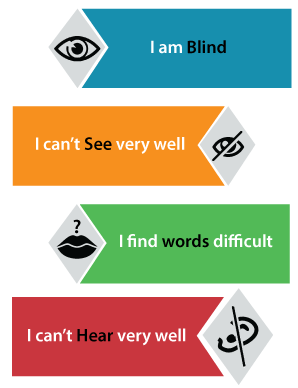
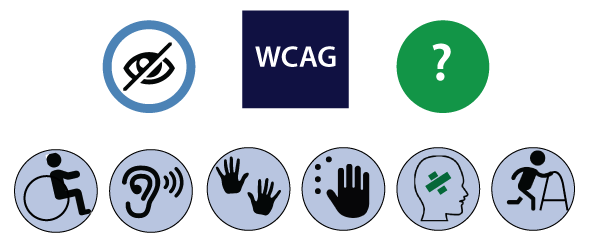
The primary purpose of Accessibility testing is to accommodate people who have disabilities like:

Accessibility testing
  • Hearing Deficiency: In this, the person is not able to hear or hear clearly and has sensory issues such as hearing disabilities and deafness.
  • Learning Impairment: The people who are facing reading difficulties.
  • Physical Disabilities: In this type of disability, the people are not capable of using the Keyboard or the Mouse with one hand and facing the problem in hand activities, muscle detention, and reduced motor abilities.
  • Visual Impairments: The visual or vision disabilities define that when a person has complete blindness, poor vision abilities, color blindness, and flashing effect problems and visual strobe.
  • Cognitive Deficiency: In this, the person will have poor memory, not able to recognize more complex scenarios, and learning difficulties.

Myths and facts about Accessibility Testing

MythsFacts
Accessibility testing is only for physically challenged people.All types of users can use the accessibility testing as they enhance the credibility of software.
We are modifying the unapproachable application to the available use, which causes us lots of time and money?We can work on the typical requirements that are essential for the challenged users because sometimes, it is not required to integrate all the modifications at one time.
Accessibility testing is costly.This testing is not costly if we recognize the accessibility issues at the design phase besides the extensive testing, which can help us to decrease the cost and save lots of rework as well.
Accessibility testing is basic and tedious process to perform.Here, we can prepare our application in such a way that all types of users can use it.

How to perform accessibility testing

We can perform accessibility testing both manually and with the help of automation as well. First, we see that how we perform accessibility testing manually:

For accessibility testing, we have many tools available in the market, but while using it, we may face some problems such as budget, less knowledge, and so on. To overcome these issues, we will perform accessibility testing manually.

Let us see some scenarios, where we test the accessibility of the application manually:

  • Modifying the font size to large: We can use the large font size and check the availability.
  • Testing for captions: Here, we will test that a caption should be visible and also ensure that it is expressive. As we know that while we are accessing the Facebook application, sometimes the images and videos take lots of time to load, where the captions will help us to understand what is in the pictures and video.
  • By deactivating the style: We can disable the method and test if the content of the table is accurately lined up or not.
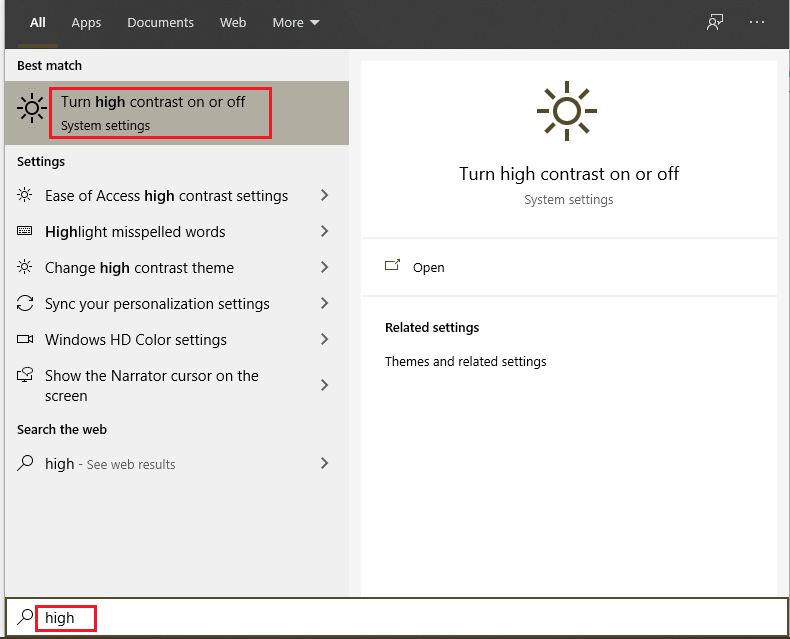
  • We can use high contrast mode: If we can use high-contrast mode, we can highlight the website’s content. When we turn the high contrast mode in our windows, the content of the site gets highlighted automatically as it turns into white or yellow, and the background turns black.

To turn on high contrast mode, search the high contrast mode in the search box of the start menu on your system as we can see in the below image:

Accessibility testing

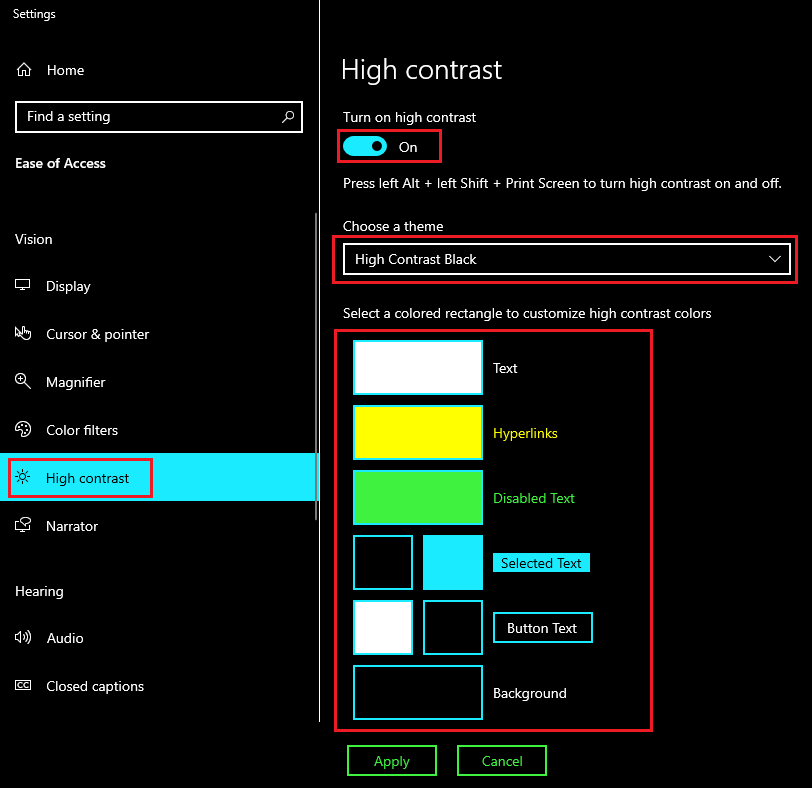
Here, first we turn-on the high-contrast, and we can also select a theme from the given drop-down list as we choose the high contrast theme as we can see in the below image:

Accessibility testing

After modifying the settings, our browser will look like this:

Accessibility testing
  • Skip navigation: We can also skip the navigation sometimes as it is helpful for people who have the motor incapacities. We can change our effort to the top of the page by clicking on the Ctrl + Home
  • Turn-off the CSS [cascading style sheet]: Generally, the Cascading style sheet is used to define the appearance of the document. If we turn off this, we can test the text presentation, text style, and background color of the application.
  • Use the field label: If we use the field label as it will help us in filing a form because this, we can see the template and fill out the required information while we ordering something online and login.
  • PDF document: In we can try to save the PDF file in the form of text and test whether the order for the content is kept or not.
  • Content scaling: We can check the image readability while zooming out it.

Automation method

Generally, the Automation technique is used for various testing methods. The automation testing process contains multiple tools to perform accessibility testing.

Some of the most commonly used tools are as follows:

  • Hera
  • Wave
  • Accessibility valet
  • TAW
  • aDesigner
  • WebAnywhere
  • Web accessibility toolbar

Hera

The Hera tool is to test the accessibility of Web pages based on the WCAG requirement. It is used to do an initial set of tests on the page and also finds the automatically detectable issues. It will help us in manual modification by highlighting the parts of the page, providing guidelines on how to perform the tests, and also verify the style of the application which comes with a multilingual preference.

Wave

Accessibility testing

It is a web accessibility tool that is introduced by WEBAIM. It is an open-source tool that automatically tests the web page for several phases of accessibility. It is a suite of assessment tools which ensure the writers make their content more accessible to those who are physically challenged.

It is used to identify the WCAG (web content accessibility toolbar guidelines) issues but also simplifies the human assessment of web content. The WAVE tool will make sure that our accessibility reports are protected and hundred percent isolated.

Accessibility Valet

The accessibility valet tool is used to test the web pages besides the Web Content Accessibility Guidelines [WCAG] agreement. This tool includes various features such as:

  • It is a scripting tool.
  • It will display the detailed reports to the developers.
  • It will provide the automatic cleanup.
  • It will help us to convert the Html to Xhtml.
  • This tool will also provide the meta-data for the semantic web and WWW.

TAW

It is a tool that will help to explore the website in agreement with the W3c web accessibility strategies and also display the accessibilities problems. It is an online tool that defines the accessibility of our website. The web accessibility test problem is further classified as Priority 1, priority two, and priority 3. This tool will also provide the subsets of WCAG 1.0.

aDesigner

The aDesigner tool is established by IBM that helps us to understand the visually impaired persons. Thus the designer can recognize the necessities of Impairment people and create the applications.

WebAnywhere

It is an open-source tool, which is a web-based screen reader for the web. The screen reader allows blind people to access the network from any computer system. This tool will help the readers to read the web page as it is easily accessed on any device.

Web accessibility toolbar

It is an extension of Opera or Internet Explorer, which allows as designing web pages with the help of suitable features. The most important feature of this tool is GreyScale that helps to identify the small contrast spots in the design.

Conclusion

In the end, we can say that accessibility testing is testing where each user can use software or the application. The test engineer could perform the accessibility testing from each user’s points of view because the test engineer’s purpose of testing an application is to verify that all the strategies are fulfilled or not. All the users should easily access that application.